
How to tell a genuine FILMTEC™ membrane from a fake
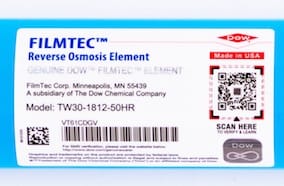
En resumen FILMTEC™ membranes are frequently copied and counterfeited, which is why both FILMTEC™ and MEMBROM® include anti-counterfeit measures. A genuine membrane is delivered sealed, dry and with no liquid in the bag. Check the label: serial number, holograms and, on TW30 models, a verification QR code. Although many users don’t know it, FILMTEC™ membranes […]
Water purification basics
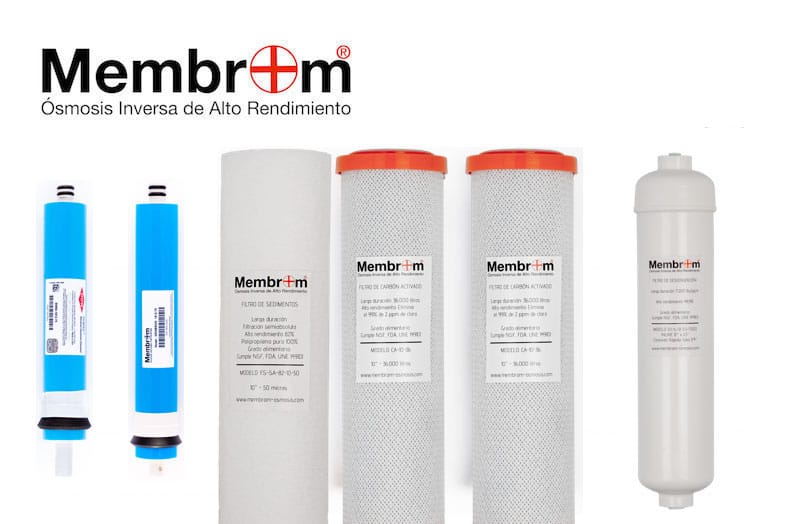
In short Purifying water means removing everything that isn’t the H2O molecule: suspended solids, dissolved solids and volatile substances. Each contaminant needs its own technology: sediment filters, activated carbon, reverse osmosis or deionisation. The more purity you need, the more purification stages are combined. What does purifying water mean? Purifying water means removing the substances […]
Sediment filters: microfiltration of suspended solids
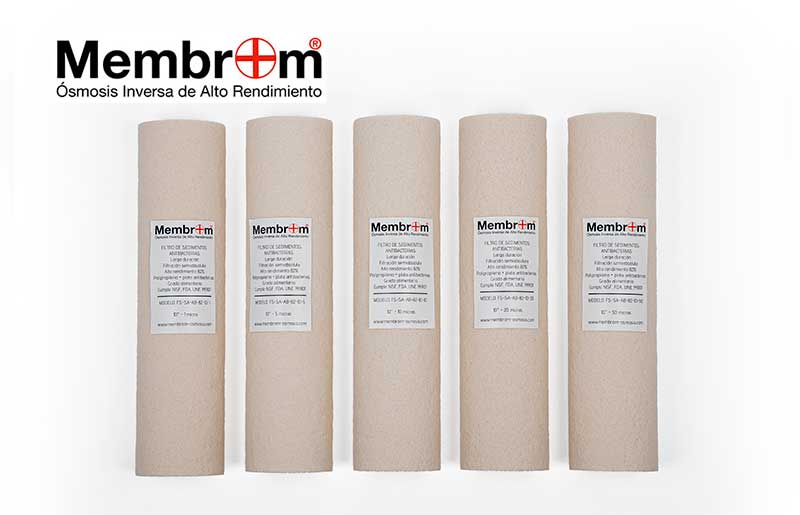
In short Sediment filters remove suspended solids (TSS) by microfiltration, from 0.1 to 100 microns. Nominal filtration: retains 50 to 95% at the stated size. Absolute: at least 99%. MEMBROM® semi-absolute filters retain 82% at the nominal size and 99% at the next size up, and last up to 20 times longer than a standard […]
How to tell the quality of reverse osmosis membranes apart
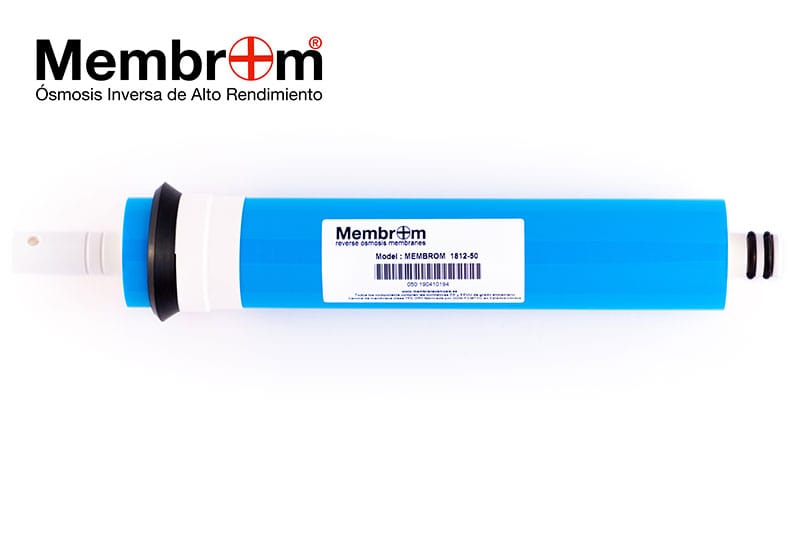
En resumen The quality of a reverse osmosis membrane is measured by its salt rejection, flow rate, chemical resistance and service life. Certifications (such as NSF/ANSI 58) guarantee that the membrane has been independently tested. At MEMBROM® we only work with top-performance membranes: genuine FILMTEC™ and MEMBROM® with FILMTEC™ sheet. The membrane is the heart […]
Activated carbon water filters: adsorption and dechlorination
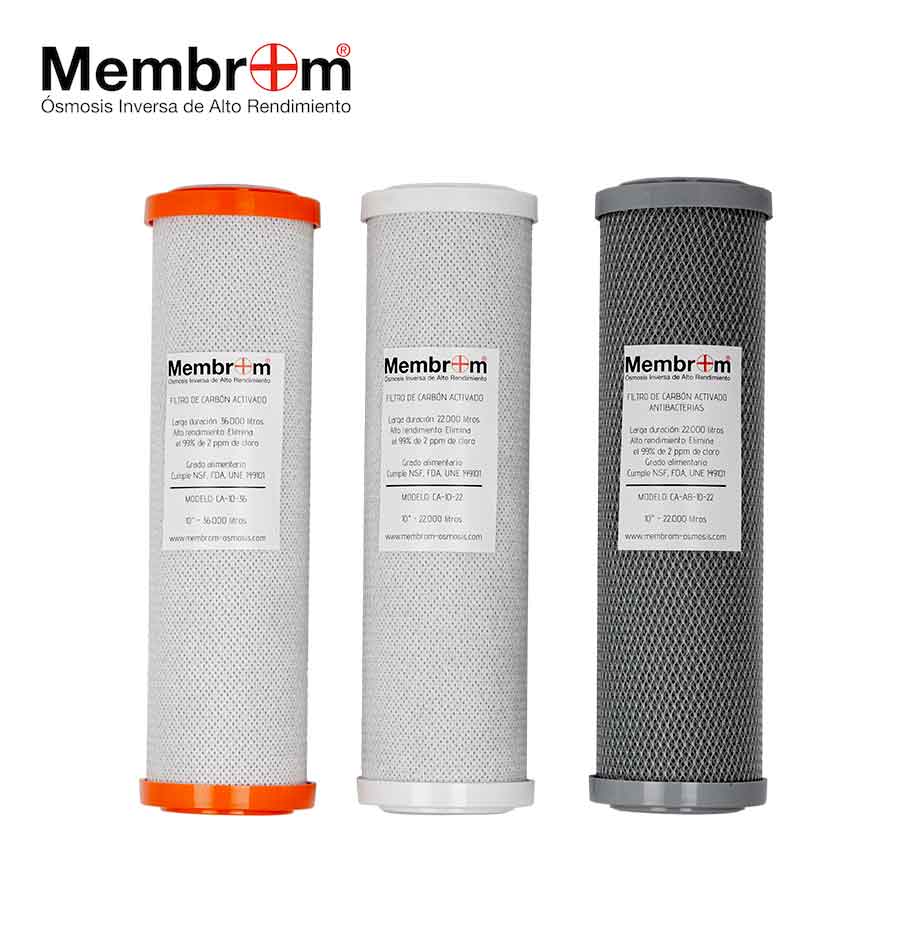
In short Activated carbon removes volatile substances from water by adsorption: chlorine, ozone, volatile organic compounds (VOCs) and gases that cause odour and taste. Carbon block is more effective than granular carbon and releases far fewer particles. With 2 carbon filters in series, chlorine drops to 0.02 ppm after 22,000 litres: no taste and no […]
Reverse osmosis: removing dissolved solids from water
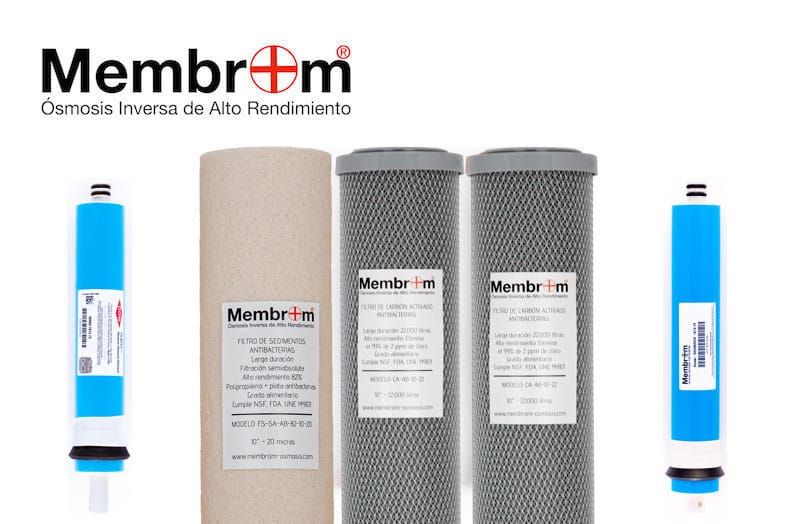
In short Reverse osmosis separates dissolved solids (limescale, salts, metals) from water by forcing it under pressure through a semi-permeable membrane. It needs pre-filtration: 5-micron sediment and activated carbon to remove chlorine, which damages the membrane. MEMBROM® membranes with FILMTEC™ sheet reject 97% of dissolved solids while sending only 66–75% of the water to drain. […]
How to check the purity of the water produced by a reverse osmosis membrane

In short The purity of the water produced is measured by comparing the dissolved solids (TDS) or conductivity (EC) of the inlet water with that of the water leaving the membrane. A TDS meter gives the result in ppm (1 ppm = 1 mg/l). An EC meter gives it in µS/cm. MEMBROM® membranes remove a […]
How long does a reverse osmosis membrane last?
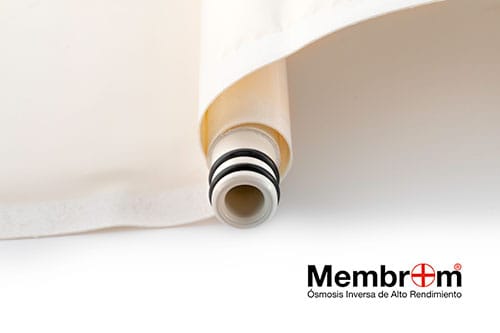
En resumen A reverse osmosis membrane usually lasts 2 to 5 years, depending on its quality, the incoming water and maintenance. MEMBROM® and FILMTEC™ membranes last 50% to 300% longer than a standard membrane: up to 6 years when well maintained. The sign that it’s exhausted is that the purity of the water produced gets […]
2:1 low-waste anti-bacterial home reverse osmosis
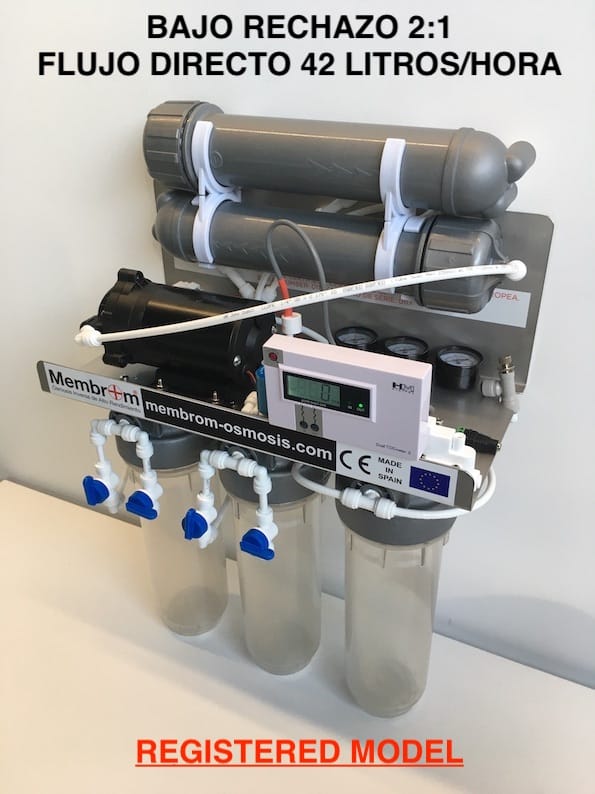
In short A 2:1 home reverse osmosis system: for every 2 litres purified it rejects only 1. Filters and membranes that can last 8 years with a household consumption of 5 litres a day. Real case in Seville: water at 515 ppm brought down to 23 ppm (95.5%), free of nitrates and excess chlorine. Home […]
How to work out the water produced and rejected by a reverse osmosis membrane
En resumen Product water (permeate) is the water that comes out purified; waste water (concentrate) carries the dissolved solids to the drain. A standard membrane produces 15% and rejects 85% (a 1:6 ratio). MEMBROM® membranes reach 1:2 or even 1:1 while maintaining 96–97% purification. Water temperature can change output, waste and purity by up to […]
MEMBROM® high-performance 2:1 low-waste reverse osmosis
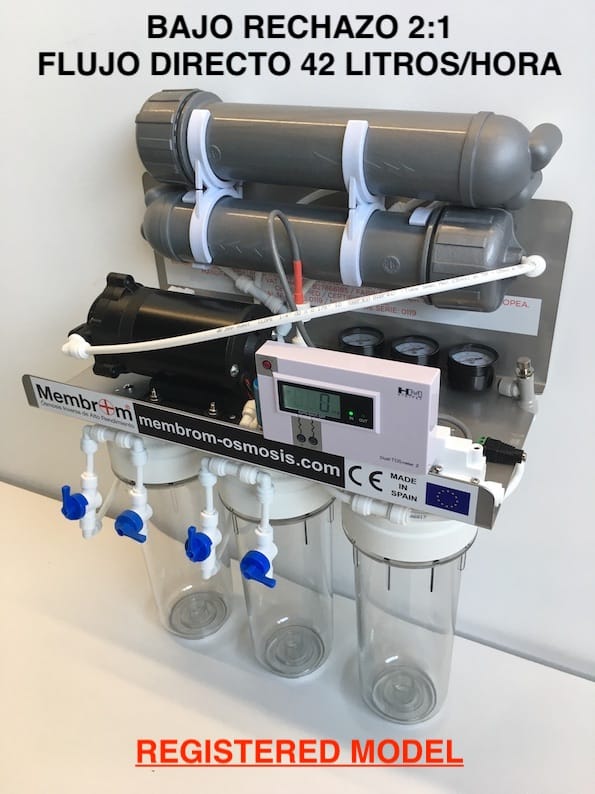
En resumen A 2:1 reverse osmosis system purifies 2 litres for every litre it rejects: it makes use of two-thirds of the water. MEMBROM® guarantees a real 2:1 ratio, a minimum of 42 L/h, 90–99% removal of dissolved solids, filters lasting 22,000 to 56,000 litres and resistance to 7–8 bar. Real customer results: up to […]
2:1 low-waste anti-bacterial semi-industrial reverse osmosis
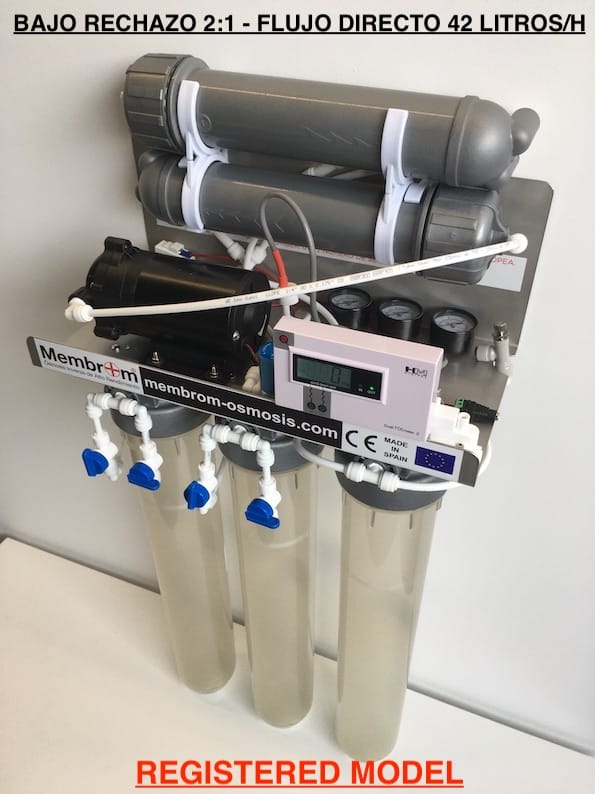
En resumen A small beverage company needed very pure water, with anti-bacterial control and without fully demineralising it. The MEMBROM® OI-NX-2:1-07-AB20 semi-industrial reverse osmosis system brought the water down from 42 ppm to 3 ppm with no need for deionising resins. Savings: 385 litres of water a day and filters that last almost a year […]
How to install a reverse osmosis membrane
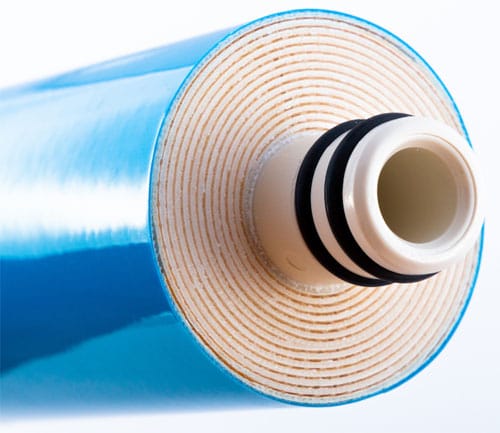
Important: always follow the instructions from the manufacturer of your system and membrane to ensure a correct and safe installation. Here is our general recommendation. Changing the membrane in a home reverse osmosis system is easier than it looks. Although the process can vary depending on the model, these are the general steps to install […]
Keeping your aquarium healthy with reverse osmosis
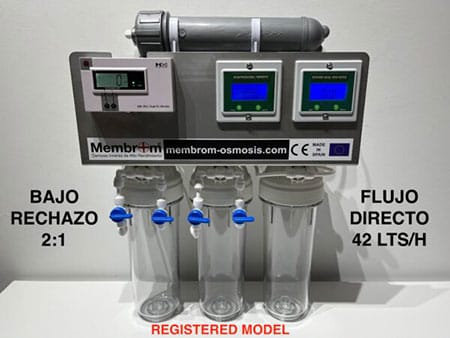
In short Reverse osmosis for aquariums removes chlorine, heavy metals, pesticides, nitrates and phosphates from tap water. It lets you control pH and hardness, reduces algae and protects sensitive invertebrates. MEMBROM® systems remove 95–99% in hard water, reject very little water (2:1 or 1:1) and their filters and membranes last for years. An aquarium is […]
Uses for reverse osmosis water at home: a complete guide
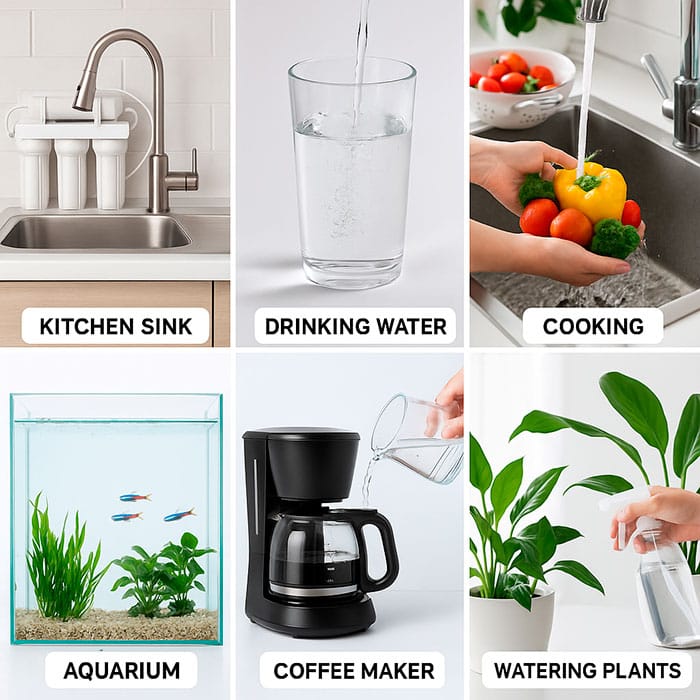
In short Reverse osmosis water is good for much more than drinking: cooking, personal care, cleaning, ironing, aquariums and plants. Because it removes up to 99% of contaminants, it adds no flavours, leaves no limescale and lifts dirt more easily. Use tap water for initial cleaning (it contains chlorine) and reverse osmosis water where purity […]
Deioniser filters and demineralised water: why you should start with reverse osmosis
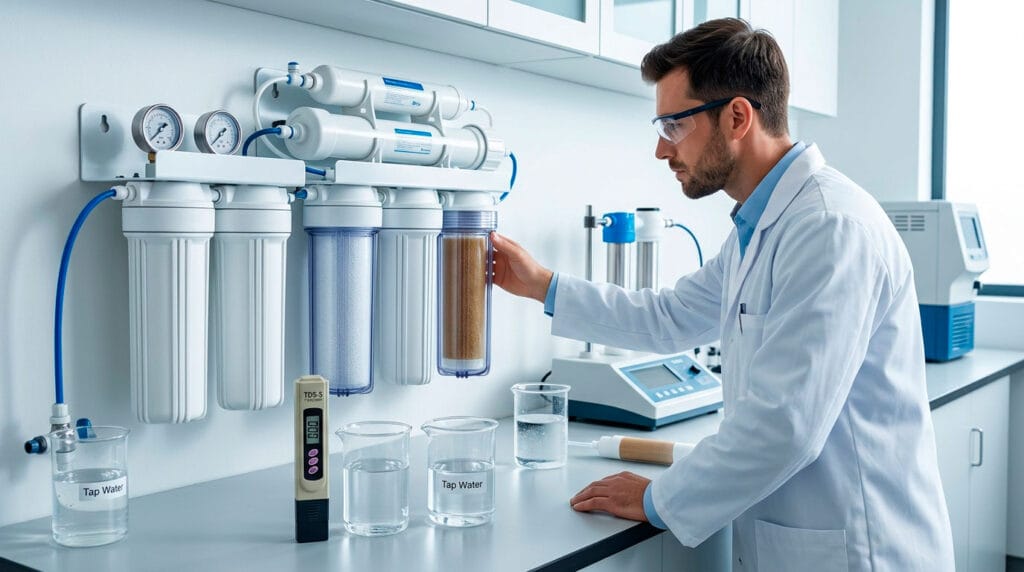
Looking for a deioniser filter to get demineralised water, laboratory water or water with a TDS of 0? The answer depends mainly on one thing almost nobody checks before buying: whether the water in your area is soft or hard. With soft water, a good reverse osmosis system is usually enough for almost everything. With […]