- Reverse osmosis for aquariums removes chlorine, heavy metals, pesticides, nitrates and phosphates from tap water.
- It lets you control pH and hardness, reduces algae and protects sensitive invertebrates.
- MEMBROM® systems remove 95–99% in hard water, reject very little water (2:1 or 1:1) and their filters and membranes last for years.
An aquarium is a delicate ecosystem that needs a precise water balance to keep fish, plants and other organisms healthy. One of the most effective tools for achieving and maintaining that quality is reverse osmosis: properly installed and maintained, it becomes a key part of long-term success.
What is reverse osmosis for aquariums?
It is a purification process that removes impurities and contaminants from tap water before it is added to the aquarium. It uses a semi-permeable membrane and pressure to remove substances such as chlorine, heavy metals, pesticides, nitrates and phosphates, which are harmful to fish.
The result is high-quality pure water that lets you control the water parameters precisely. If you want to understand the process in depth, read what reverse osmosis is and how it works.
Benefits of reverse osmosis in the aquarium
- Pure, contaminant-free water: prevents disease and supports the healthy growth of fish and plants.
- Precise control of parameters: starting from purified water lets you adjust pH and hardness to recreate each species’ natural habitat.
- Less algae: removing the phosphates and nitrates that feed algae reduces their growth.
- Protection for sensitive invertebrates: shrimp and snails are extremely sensitive to contaminants; reverse osmosis removes the toxins that could harm them.
How to choose and maintain a reverse osmosis system for your aquarium
1. A system designed for maximum purity
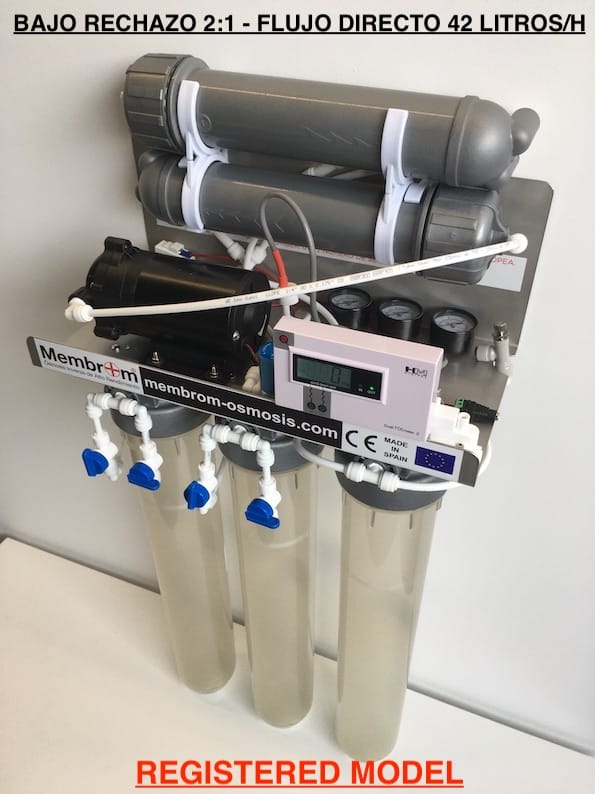
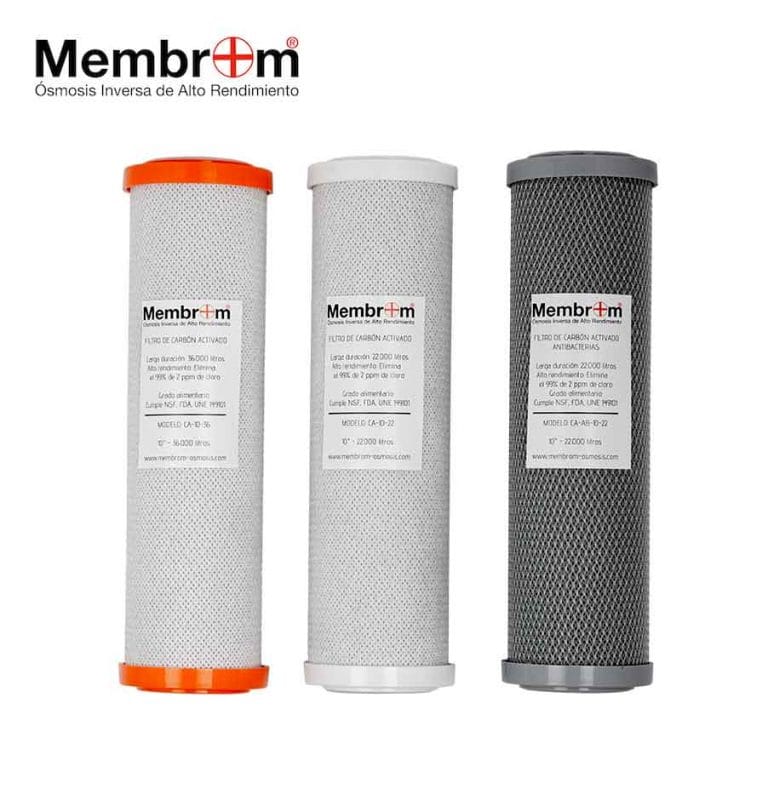
MEMBROM® reverse osmosis systems are designed to produce the purest water possible: they remove 95–99% in hard water and 90–95% in soft water. They include high-capacity sediment filters and activated carbon filters, and two membranes with sheet made by FILMTEC™.
2. Minimal maintenance
With MEMBROM® systems, maintenance is kept to a minimum:
| Component | Water produced before replacement |
|---|---|
| Sediment and activated carbon filters | 11,000 to 37,000 litres |
| Membranes | 22,000 to 74,000 litres (in many cases up to 150,000 litres thanks to pre-filtration) |
3. Monitor water quality
Although reverse osmosis produces very high-quality water, it’s worth testing the aquarium water regularly to catch any problem early. In some cases you’ll also need a deioniser filter to purify the water even further. As MEMBROM® systems already deliver very pure water, the deioniser lasts much longer. We explain it in deioniser filters and demineralised water.
4. Save water
As well as purity, consider the ratio between water produced and water rejected. MEMBROM® systems purify 2 litres for every litre rejected (2:1 models) or 1 litre for every litre rejected (1:1 models), without compromising on purity or on the long life of filters and membranes.
5. Monitor the system
All MEMBROM® OI series systems offer an optional TDS meter in ppm or EC conductivity meter in µS, with two probes that compare unpurified and purified water. The OI-PR series adds optional real-time flow meters and cumulative litre counters. If you’re not familiar with these measurements, see how to check the purity of the water produced.
Video: MEMBROM® OI-PR reverse osmosis for aquariums
In the video of the MEMBROM® OI-PR-2:1-07-NX-AB10 system you can see:
- Ratio of purified to rejected water: the inlet flow meter (right) reads 1.16–1.17 litres per minute and the product water meter (left) 0.75–0.76 l/min. That’s almost exactly 2:1, which would be 0.78 l/min (1.17 ÷ 3 × 2). We set it slightly below so it doesn’t exceed 2:1 if the mains pressure accidentally rises, which would damage the membrane.
- Quality of the water produced: the conductivity meter shows extremely pure water at 13 µS, equivalent to 6.5 ppm of dissolved solids. The inlet water was 640 µS (320 ppm): in factory tests we start from 42 ppm soft water and add sodium chloride and calcium carbonate to turn it into hard water.
- Cumulative flow (not shown in the video): the flow meters are also counters. Pressing the right-hand button once shows the litres that have entered the system and the litres it has produced.
- Pressures (not shown in the video): the system has 3 pressure gauges, at the water inlet, after the sediment filter and at the membranes.
You can see real purification results from customers in different provinces of Spain and Portugal on commercial reverse osmosis. And if you’re looking for a more affordable option with the same purification results, low waste and filter life, see our low-waste reverse osmosis.
Looking for a specific system? See our reverse osmosis systems for aquariums.