- Purifying water means removing everything that isn’t the H2O molecule: suspended solids, dissolved solids and volatile substances.
- Each contaminant needs its own technology: sediment filters, activated carbon, reverse osmosis or deionisation.
- The more purity you need, the more purification stages are combined.
What does purifying water mean?
Purifying water means removing the substances in it that are not strictly the water molecule, H2O, made up of two hydrogen atoms and one oxygen atom. These substances can be of three types:
- Suspended solids: sand, dust, mud.
- Dissolved solids: salts, limescale or metals.
- Volatile substances: chlorine or volatile organic compounds.
The right treatment depends on two things: the analysis of the source water and the degree of purity you need for the intended use.
Why do we purify water?
The reasons vary widely. Some classic examples:
- The water contains sand that clogs taps or industrial and medical nozzles.
- The water tastes and smells bad because of excess chlorine.
- The water contains components that are harmful to health, such as arsenic.
- The water has too much calcium carbonate (limescale) and tastes bad.
- The water contains components that damage crops or harm the aquarium.
- The application requires distilled-grade or ultrapure water.
- The water leaves marks when it dries after cleaning.
Which technology removes each contaminant
| What you want to remove | Technology |
|---|---|
| Suspended solids (sand, dust) | Sediment filters (microfiltration) |
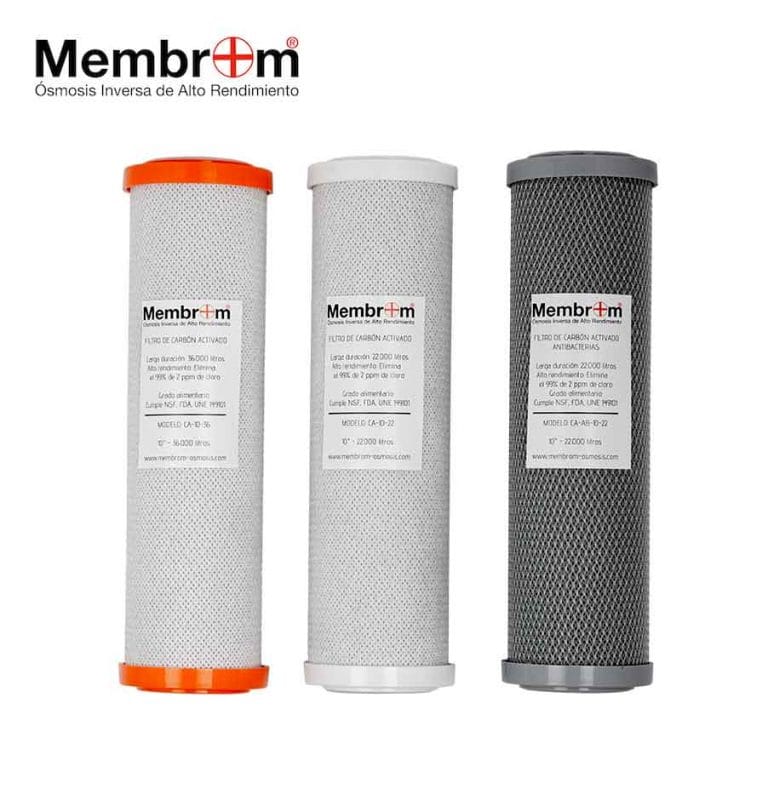
| Volatile substances (chlorine, volatile organic compounds) | Activated carbon filters (adsorption) |
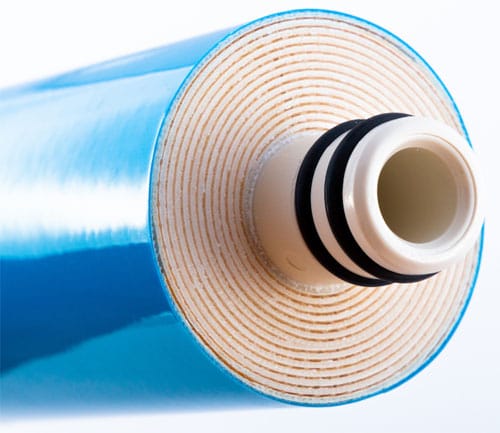
| Dissolved solids (limescale, salts, metals) | Reverse osmosis |
| Everything, to obtain ultrapure or demineralised water | Deioniser filters after reverse osmosis |
Separating certain contaminants almost always requires a combination of several systems: the more purity we want, the more purification stages are needed.
From filters to purification systems
Filters are placed inside water filter housings and connected with tubing to form purification units and systems. Some examples:
- To remove sand: microfiltration systems with sediment filters.
- To remove the bad taste of chlorine: adsorption dechlorinators with sediment and activated carbon filters.
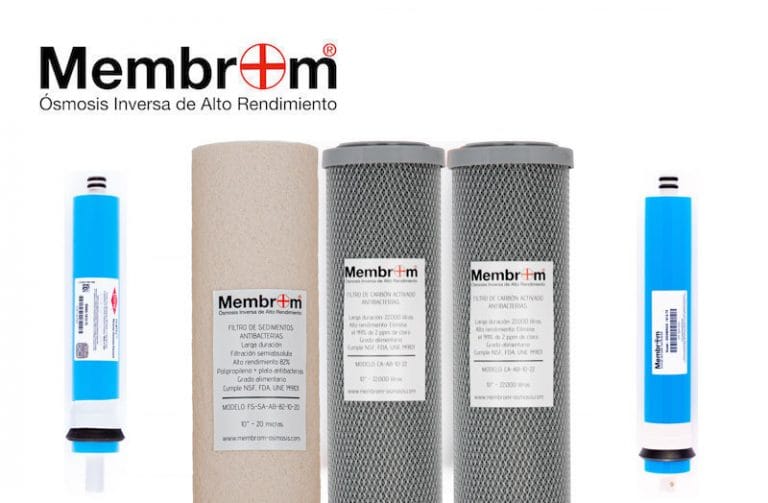
- To remove the bad taste of limescale: reverse osmosis systems with sediment filters, activated carbon and membranes.
- For specific applications with flow and water quality monitoring: commercial reverse osmosis systems with monitors, which let you see how filters and membranes are performing.
- To obtain ultrapure water: reverse osmosis plus deionisation (RO/DI) systems, with sediment filters, activated carbon, membranes and deioniser filters.
Keep learning
Go deeper into each technology with our technical guides:
- Sediment filters: microfiltration of suspended solids
- Activated carbon filters: adsorption and dechlorination
- Reverse osmosis: removing dissolved solids
- Deioniser filters and demineralised water
Have a specific application? See reverse osmosis applications by sector.